Check out JCHS podcast series - I am first guest

Friday, May 16, 2014

Givers, Takers, and the Impact of Motivation (Bechukotai 5774)

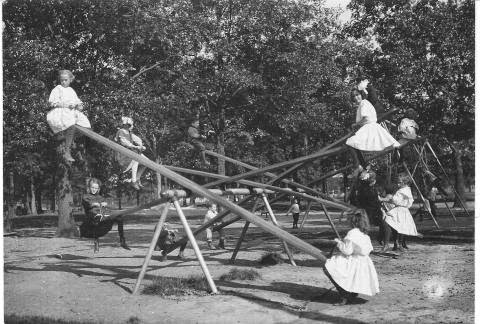
Minneapolis Park Old Fashioned Teeter Totter
In a motivation study of the medical staff at a hospital, Adam Grant put up two versions of a sign to encourage handwashing.  

One sign reminded doctors and nurses that their patients could catch diseases if medical staff was lax about handwashing.  The other sign focused on how doctors or nurses could catch diseases themselves if they were lax about handwashing.  Which sign do you think had the most impact?

I’ll come back to that study soon. First a connection to the Torah portion this week as we wrap-up the book of Leviticus with a parsha that is itself a study in motivation.  The Torah portion, Bechukotai, puts up a similar range of "signs" during the wilderness journey of the ancient Israelites seeking to motivate them.

Friday, April 25, 2014

Loving Your Neighbor: The Rabbi's Gift to a Monastery (Kedoshim 5774)

This week's Torah portion includes one of the most stirring and yet difficult to enact mitzvah in all of Torah:  "You shall love your friend/neighbor as yourself."  (Leviticus 19:18)  I doubt that the Torah focus here is on mere feelings of affection.  Still it is difficult to imagine how one might enact this mitzvah in daily life?  How much more difficult it is if we do not already love and value ourselves.   

The 19th century Haktav v'Hakabbalah (Rabbi Yaakov Tzvi ben Gamliel) offers a list of daily life ways to enact this mitzvah.  He goes beyond treasured friends to include all others with whom we interact.  His list includes: 

  • Affection for others should be real not feigned
  • Always treat others with respect
  • Always seek the best for others
  • Give others the benefit of the doubt
  • Do not consider yourself better than others
(cited in Artscroll "The Chumash" (Nosson Scherman, ed) p 662.)

He seems to be teaching that the essence of this mitzvah is framing our consideration of others in terms of respect, care, and generosity, then acting on that framework.  That lesson resonates with the popular story called "The Rabbi's Gift."  The setting and tone of this story belie the fact that its earliest source was (only) 1979. There are a number of versions; here is my adaptation based on Francis Dorff's original.  


Wednesday, April 9, 2014

Connecting Four Dots for Pesach (Acharei Mot 5774)

Preparing for Pesach, which begins next week, the pattern of fours is on many minds -- the Four Questions, the Four Children, the Four Cups of Wine.  The festival even has four different names.  Here's a different list of four -- think a moment about what links them:  
  1. Walt Disney
  2. A 9 year old from northern California
  3. The week's Torah portion
  4. Pesach
LisaKristine.com photo that inspired Vivienne
A few words about each of these four dots before we connect them:  
  • Walt Disney said, “If you dream it, you can do it.”
  • The 9-year old is Vivienne Harr who raised more than $100,000 for a worthy cause selling lemonade.
  • The Torah portion identifies a long list of prohibited relationships -- intimate associations we should avoid.  Some are on the list because they are icky or wrong. One prohibition -- against associating with idol worshipers (Leviticus 18:21) -- seems to make the list because Torah fears we might become just like those with whom we hang out.  
  • Pesach is a celebration of the struggle for freedom at once ancient and immediate.
Vivienne Harr actually starts to connect the dots for us.  She is the girl who raised more than $100,000 toward ending child slavery.  

Thursday, February 20, 2014

The Call to One Boat (Vayakhel 5774)


At the start of each week at school we gather the entire community together for time we call "Hakhel."  It is time to share the empowering nature of our community. The word "hakhel" echoes from the word that begins this week’s Torah portion, Vayakhel -- as it begins "vayakhel Moshe (lit. Moses assembled or called together)" the entire community of Israel. (Ex. 35:1)

"Hakhel” also becomes the penultimate mitzvah in Torah; a once-every-seven-years convening of the entire community for hearing and learning through a reading of the entire Torah. Everyone was to be at that reading. Torah calls out for gathering even strangers who live in the neighborhood and children (Deut. 31:10-15)  The rabbis later interpret this calling together to include scholars steeped in Torah to listen with great concentration (Maimonides, Hilchot Chagigah 3:6) because even they could learn something new in the context of this communal listening.

In other words, “hakhel” is for listening and learning in community. There are even some who link the Hebrew root for assembling a community (קהל - kuph/hey/lamed) with the Hebrew root the human voice (קול - kuph/vav/lamed). We even hear hints of that link in English where "call" as in “calling a community together” is linked to the Hebrew word "kol" or voice. 


So a story to demonstrate the link between the power of community to hear the voice of others.  

Once upon a time, there was a wise man who thought he had grown so wise there was no need for him to listen to others anymore. He would wake early each day and go immediately to his library to continue reading and the learning

Friday, February 14, 2014

Learning From Others: My Father and "Jesús" (Ki Tissa 5774)


My father died at this season 16 years ago. I am so grateful for the many lessons he taught me and the smile and optimism he encouraged in me. Among the many wonderful memories that have 'stuck' one especially comes to mind because of the Torah portion this week, Ki Tissa (lit. ‘when you raise up’). It is a memory that lifts me nearly daily. The memory is about the power of learning from hard work, from experiences that are not anticipated, and from others who are no different from me.

The parsha includes a reiteration and an elaboration on the mitzvah of Shabbat -- of marking each week sacred time set apart for rest/renewal. But beyond the elaboration on Shabbat as sacred -- set apart -- time, there is another mitzvah (or divine exhortation) in the text

It is the mitzvah of work: "For six days shall work be be done." (Ex. 30:15) This echoes to the phrase embedded in the Ten Commandments about Shabbat “for six days you are to work and do all of your labor." (Ex. 20:9) Why are we commanded to work? If Shabbat is so wonderful, why not organize this world so that everyday is a day of rest and renewal?

Friday, January 31, 2014

Integrity: Inside Matching Outside; Aligning Our Ideals and Our Actions (Terumah 5774)


Imagine being in high school and your teacher asks for help solving an ethical problem. The teacher bought a desk from a complete stranger for $150 on Craigslist. He picked up the desk and took it home in his mini-van. A friend helped carry it into the house. Unfortunately the desk was a little too big to get through the door of the room where the teacher wanted to put the desk. 


They tried taking the door off its hinges but still the desk didn’t fit through the doorway. Then they started to take the desk apart, figuring they could move it in pieces better than whole. 


After taking off the top of the desk the teacher noticed a plastic bag stuck behind the desk's file drawers. Inside the bag were some $100 bills. Lots of them. By the time he finished counting all the money in the bag stuck behind drawers in the desk he bought for $150, the teacher had counted up $98.000. Now the teacher asks his students for advice: Should he invest the $98,000 for his four children’s education or give the money to a charity or to his school, or return the money to the woman who sold him the desk?

Friday, December 20, 2013

Gratitude with an Attitude (Shemot 5774)


The Torah portion this week has many memorable features - a Pharaoh who knew not Joseph enslaving the ancient Israelites; the birth, rescue, and development of Moses; the burning bush to name just three. But my memory about this portion is rooted in the fact this was my Bar Mitzvah Torah reading more than 44 years ago. Most of my memories from that day are sweet (like my grandmothers’ and aunts’ effusive pride and lemon squares) or nourishing (like my sister’s and parents’ encouragement). But one memory is difficult, still I am grateful for it.  


Unlike thousands of bar mitzvah or bat mitzvah students before me and after me, I did not publicly thank my parents during the service. My ‘bar mitzvah speech’ focused on my interpretation of the Torah text, but did not thank my parents for all they had done to bring me to that amazing moment. 

Looking back on that day, I remain baffled and unable to explain why. I should have thought of it on my own; even though my parents and teachers never mentioned it. Was I trying to seem cool? Or was I too embarrassed to say ‘thank you’? Did I think it was unrelated to the words of Torah I was trying to explain? Looking back, it was so uncool and so embarrassing not to say ‘thank you.’ Ironically, turning back to parshat Shemot this week the theme of gratitude jumps out at me. 

The Jewish value of gratitude is expressed by the Hebrew term, “hakarat hatov” (lit. recognizing or calling out the good [that someone has done for us]). Gratitude depends on not only appreciating what others do for us, but also actively remembering what others have done for our benefit. 


This week’s portion begins with a bald denial of appreciation, “there arose a new Pharaoh who knew not Joseph.” (Exodus 1:8) The commentators wonder how even a new sovereign over Egypt could be ignorant of all that Joseph did to protect and sustain that country from famine. Rashi (12th century) suggests the new Pharaoh knew of Joseph -- how could he not!?! -- still he acted as if he was unaware of what Joseph had done for Egypt. In other words, the new Pharaoh was not ignorant, he was an ingrate.

Because the Jewish value of appreciation is rooted in the Hebrew word for good, there is another verse pointing to gratitude this week. When Moses is born his mother sees that he is “ki tov - good!” (Ex. 2:2) Presumably, all parents feel this when seeing their newborn; still, it is a rare declaration in Torah. The motherly declaration here after giving birth echoes to the divine declaration after giving “birth” to the world in the story of creation when the term “tov” is used frequently to describe each aspect of creation. 

For many, the parent:child relationship is at the center of gratitude. The anonymous 13th century author of Sefer HaChinuch (Book of Education) idealizes “one who acknowledges and treats with lovingkindness the parent who treated him/her with ‘goodness.’” Chinuch continues one “should not be a scoundrel, an ingrate, who turns a cold shoulder . . . [Rather, it] is for a person to realize that his/her father and mother are the cause of his/her being in the world; hence proper for him/her to give [parents] honor and every benefit.” (Sefer HaChinuch 33:1). The creative, sustaining, and encouraging foundations of parenthood are the basis of “goodness” and appreciation that flows from it. 

If all of humanity acted this way naturally, then there would be no need for Torah and rabbinic encouragement for gratitude. The fact is, however, as demonstrated by my own behavior 44 years ago, human nature declines opportunity for gratitude. If it is true with gratitude for our parents, how much more so must it be true for those who are more removed from us. Watch what happens when you hold the door open for other in front of a store. In my experience the first person through the door often says, “thank you” because she has seen you open the door. But those who follow who encounter only an already open door, not one being pulled open by you, seem to take it for granted and neglect to even nod or say “thanks,” 

As demonstrated by the example of a new Pharaoh gratitude depends on not only appreciating what others do for us, but also actively remembering what others have done for our benefit. To remain active appreciators we have to exercise both a mindset of appreciation and memory.

Many times over the years my parents and I have chuckled over my failure to demonstrate appreciation on my bar mitzvah. While I cannot go back to that moment and fix it, I can remind myself -- and each of us -- just how powerful it is to recognize and remember anything and anyone who has earned our appreciation and gratitude. 

May this Shabbat and the coming winter break from routines of daily life give each of us more opportunities to tell others “I am grateful for . . .”